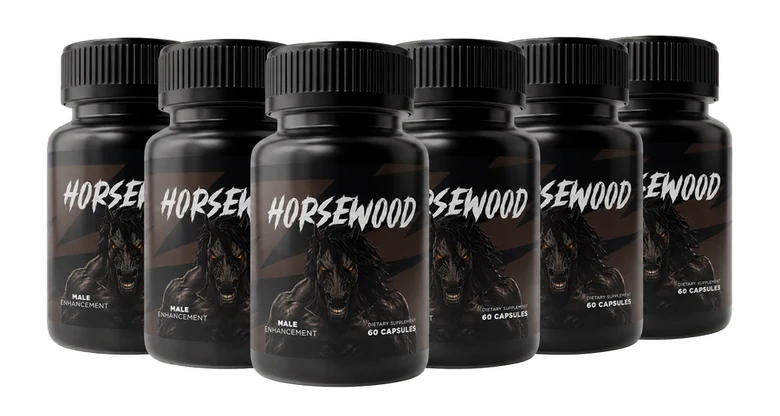
Regular price: $99 per bottle
Today from $49 per bottle
Claim the Horsewood discountBacked by the 60-day money-back guarantee. Secure checkout on the Horsewood official website.
Spirulina is a blue-green algae cultivated commercially as a food. It supplies protein, B vitamins, iron and pigments including phycocyanin, which has antioxidant properties.
Spirulina is roughly 60% protein by dry weight, which sounds impressive and is frequently quoted. At the doses used in a multi-ingredient supplement — typically a few hundred milligrams — the protein contribution is negligible.
As a food eaten in gram quantities it is nutritionally meaningful. As one of thirteen ingredients in a capsule it is not, and honest content should say so.
This is the genuinely important part. Spirulina harvested from uncontrolled water sources can accumulate heavy metals and microcystin toxins produced by other cyanobacteria.
Commercially cultivated spirulina from controlled facilities is a different proposition from wild-harvested product. Third-party testing for microcystins is the relevant assurance, and it is rarely specified on multi-ingredient labels.
A nutritional inclusion rather than a mechanistic one. Its presence in a formula is benign; its prominence in marketing is usually disproportionate to what a few hundred milligrams contributes.
Men's vitality capsules with zinc, magnesium, ashwagandha and bacopa. The Horsewood discount runs from $49 per bottle with a 60-day money-back guarantee.
See the Horsewood discountBacked by the 60-day money-back guarantee. Secure checkout on the Horsewood official website.