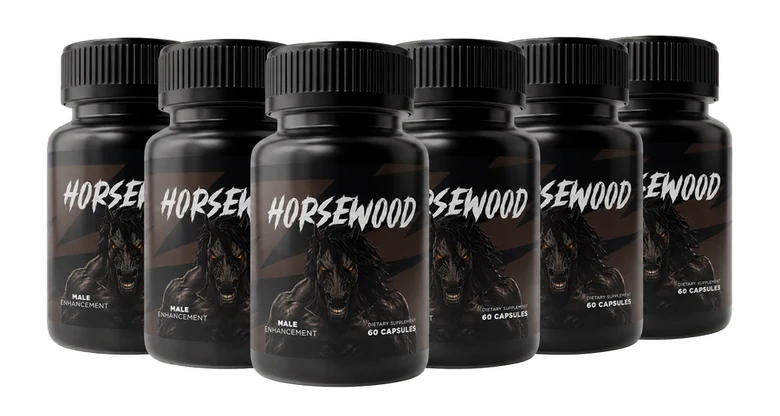
Regular price: $99 per bottle
Today from $49 per bottle
Claim the Horsewood discountBacked by the 60-day money-back guarantee. Secure checkout on the Horsewood official website.
Yes, on the marketing pages: thirteen ingredients named rather than hidden behind a category label like “Adaptogenic Herb Complex”. That is better than several competing pages for this product, which describe ingredient groups rather than ingredients.
Score: pass.
No. This is the product's clearest transparency failure and the most common complaint about it. Without per-ingredient amounts you cannot compare against the doses used in research — Bacopa trials commonly at 300 mg, ashwagandha at 300 to 600 mg.
Score: fail.
No. This matters most for turmeric, where curcumin bioavailability differs enormously between preparations, and for green tea extract, where EGCG percentage determines both effect and the liver-safety picture.
Score: fail.
Capsule shell material and excipients are not stated pre-purchase, which matters for anyone avoiding gelatin or specific fillers. Read the panel on arrival.
Score: partial.
GMP certification is claimed, which covers manufacturing process. A named third-party laboratory verifying identity, potency and contaminants is not specified.
Score: partial.
| What we scored | Rating |
|---|---|
| Ingredients named | 4.5 / 5 |
| Amounts published | 1.0 / 5 |
| Standardisation disclosed | 1.5 / 5 |
| Allergens and excipients | 2.5 / 5 |
| Third-party testing named | 2.0 / 5 |
| Manufacturing claims accurate | 4.0 / 5 |
Yes, on the official material: GMP-certified facility, made in the USA. Neither is inflated into an implied FDA endorsement, which is the common failure mode in this category.
Score: pass.
Transparency and efficacy are separate axes, and it is worth being clear that this scorecard only measures one.
A perfectly transparent label on an ineffective formula scores well here. A poorly disclosed label on a well-dosed formula scores badly. Transparency tells you what you are buying; it does not tell you whether what you are buying does anything.
What transparency does predict, reasonably reliably, is operator standards. A brand willing to publish per-ingredient amounts has accepted that buyers can compare it against competitors and against research doses. A brand that does not has chosen to keep that comparison unavailable, and the most common reason is that the comparison would be unflattering.
That is an inference rather than a finding, and it should be held loosely. Some brands withhold amounts for genuine formula-protection reasons, particularly where a specific ratio took work to develop.
The practical response is the same either way: buy the smallest package that covers a full trial, read the panel on arrival, and keep the guarantee available.
Two passes, two partials, two fails. That places this label mid-table — better than the products describing ingredient groups instead of ingredients, worse than the ones publishing a full standardised panel.
The practical consequence: you learn the dosages when the bottle arrives, and the 60-day guarantee is what protects you if they disappoint.
Mid-table transparency: ingredients are named individually, manufacturing claims are stated accurately, but amounts, standardisation and third-party testing are all undisclosed pre-purchase.
Check the Horsewood discountMen's vitality capsules with zinc, magnesium, ashwagandha and bacopa. The Horsewood discount runs from $49 per bottle with a 60-day money-back guarantee.
See the Horsewood discountBacked by the 60-day money-back guarantee. Secure checkout on the Horsewood official website.