HomeBlog › Ingredient Science

Ingredient Science

Turmeric and Curcumin: The Bioavailability Problem

Curcumin is among the most researched plant compounds of the past two decades and among the worst absorbed. That tension explains everything about the category.

Written by the Horsewood Editorial Desk Checked against the current bottle label Updated 6 August 2026 Cited: NIH ODS, NCCIH, FDA, FTC

On this page

  1. What curcumin is
  2. The absorption problem
  3. The formulation approaches
  4. What this means when you read a label
  5. The reasonable position

What curcumin is

Turmeric root contains curcuminoids, of which curcumin is the most studied. Research has examined it chiefly around inflammatory markers, with a very large published literature.

The absorption problem

Unformulated curcumin is poorly absorbed from the gut, rapidly metabolised and quickly eliminated. Plain turmeric powder delivers very little curcumin into circulation.

This is not a minor technicality. It is the reason two products both listing turmeric can behave completely differently in practice.

The formulation approaches

  • Piperine co-administration — black pepper extract, which slows curcumin metabolism
  • Phytosome complexes — curcumin bound to phospholipids
  • Micellar or nanoparticle preparations — improved dispersion
  • Standardised high-curcuminoid extracts — higher active fraction per gram

What this means when you read a label

  1. Does it say turmeric or curcumin extract? They are not equivalent.
  2. Is a standardisation percentage given (commonly 95% curcuminoids)?
  3. Is a bioavailability enhancer named?
  4. If none of the three is stated, you cannot assess the ingredient at all.

The reasonable position

Curcumin is a genuine research subject whose supplement translation depends almost entirely on formulation. A label that specifies neither standardisation nor enhancement is telling you very little.

See our label-reading guide for the wider method.

Horsewood — official website pricing

Men's vitality capsules with zinc, magnesium, ashwagandha and bacopa. The Horsewood discount runs from $49 per bottle with a 60-day money-back guarantee.

See the Horsewood discount
Disclaimer: this article is general information, not medical advice. Horsewood is a dietary supplement and is not intended to diagnose, treat, cure or prevent any disease. Individual results vary. For adults aged 18 and over. Talk to your doctor before starting any supplement, particularly if you take prescription medication.

Horsewood Editorial Desk

We write from the product label outward, tag each ingredient by evidence strength, and publish the unflattering parts too. See our editorial standards.

Keep reading

Answers

Frequently asked questions

No. Curcumin is one active compound in turmeric root, and unformulated turmeric powder delivers very little of it into circulation.

Piperine is one of several approaches to improving curcumin absorption. Check whether the label names any enhancement method.

This website may earn a commission on purchases made through links to the official Horsewood store, at no additional cost to you. Our editorial standards and affiliate disclosure are published in full on this site.

No. Horsewood is a dietary supplement and is not intended to diagnose, treat, cure or prevent any disease, including erectile dysfunction or low testosterone.
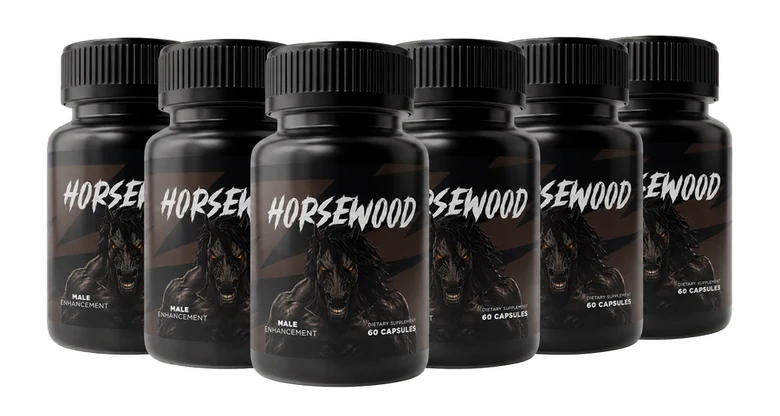
Horsewood six-bottle package at the official website sale price
Regular price: $99 per bottle
Today from $49 per bottle
Claim the Horsewood discount

Backed by the 60-day money-back guarantee. Secure checkout on the Horsewood official website.

Get the Horsewood Discount — From $49 60-day money-back guarantee • Official website only